
QLi EXCLUSIVE • PROJECT PROFILE
LeanDock
Many services, one platform.
A Rust-based desktop workspace designed to bring everyday web apps into one organized environment, with deliberate control over what stays active.
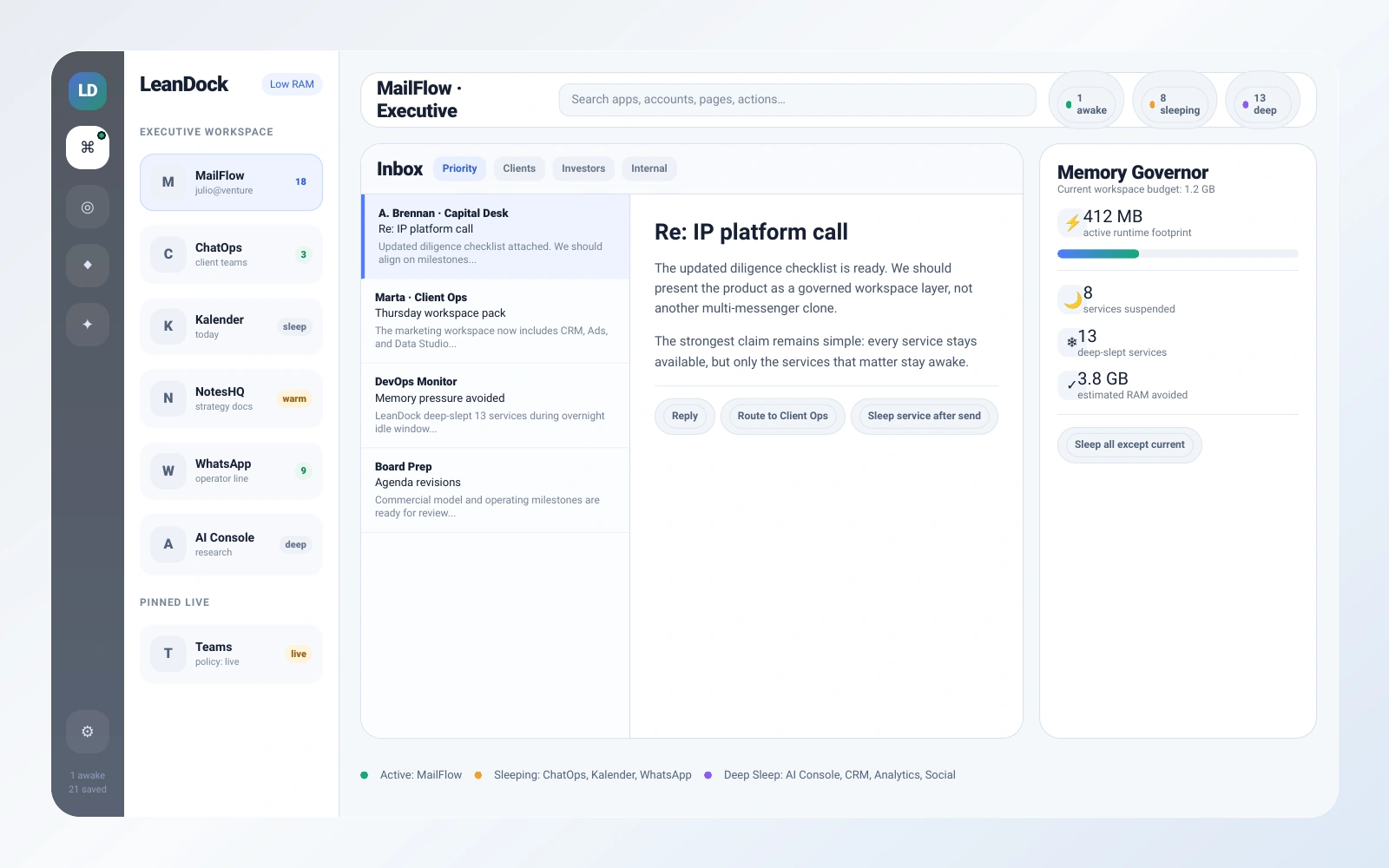
Workspace and memory governor · LeanDock concept UI simulation; figures are illustrative.
Project ownership
Exclusively QLi
Core technology
Rust
Target platforms
macOS · Windows · Linux
Project status
In development
An organized workspace.
Low memory footprint. High performance. Strong security.
App security with full isolation. When emails, messaging, calendars, documents, services, and business portals can spread work across multiple browser tabs or installed applications, they consume valuable computer resources and take up space that could be used for focused operations. Browsers are also subjected to spyware and security breaches. LeanDock frees up valuable desktop space and computer resources while providing a consolidated, secure, and customizable workspace for productivity without clutter.
Workspaces & accounts
The scope brings services together by client, project, or role, with separate account profiles, a service catalog, and custom web-app entries.
Local-first foundations
Local workspace configuration and clear profile boundaries guide the architecture. Optional configuration sync and managed team features are part of the longer-term scope.
More than apps and services.
A controlled repository for downloaded files and documents too.
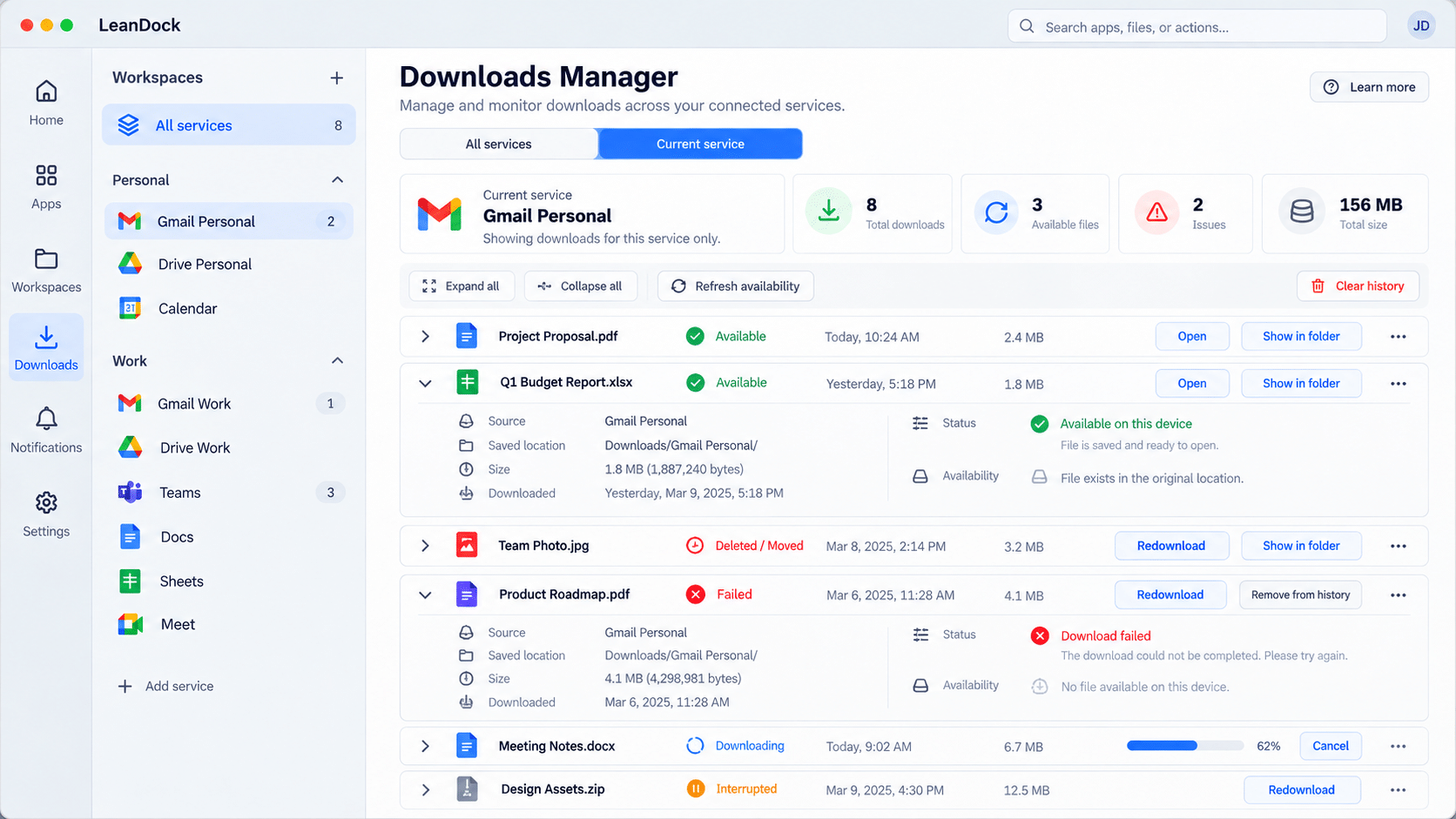
Among LeanDock's enhanced productivity features is the Download Manager, which links each file to its original service, saved location, availability, and transfer status. Efficiency is dependent on more than just the use of services and websites; it also hinges on the management of available resources. Users will find it much easier to locate and examine downloaded files with LeanDock's per-service views.

LeanDock Downloads Manager · Combined overview and selected-service study.
THE ENGINEERING BEHIND LEANDOCK
Built in Rust.
Designed for desktops.
LeanDock is a QLi-exclusive development project with a Rust core, targeting macOS, Windows, and Linux. Its architecture direction combines native OS web views, local persistence, and explicit service lifecycle policies.